
The innovation of the decade in prenatal genetics has arrived.
The first-and-only, non-invasive confirmatory test using whole genome sequencing of intact circulating fetal cells.
Introducing Unity Confirm™
Over the past several decades, advances in prenatal testing have redefined clinical care. Now, the next innovation has arrived – bridging the gap between prenatal screening and invasive diagnostic testing.
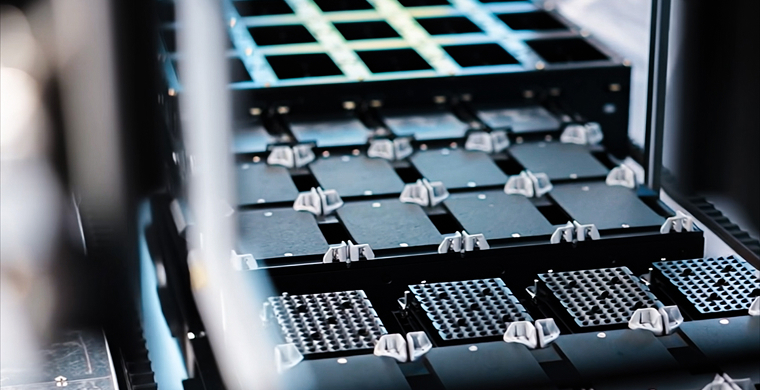
Proven technology

Broadened access

Empowered patient care
Where screening ends, something new begins.
While amniocentesis remains the gold standard,8,9,10 the majority of patients cannot, or choose not to, pursue invasive testing after high-risk Unity Aneuploidy NIPT results.**
Powered by Fetal Cell Capture™ technology, Unity Confirm captures intact circulating fetal cells – delivering rapid CVS-like insights – without the procedural risks.*
Only with Unity Confirm

Non-invasive confirmatory testing
Accessible following a high-risk Unity Aneuploidy Screen result through 15 weeks 6 days gestation**
Whole genome sequencing of individual intact circulating fetal cells
Effectively provides 100% fetal fraction***
Imaging and sequencing-based fetal cell confirmation allowing for high accuracy
* Unity Confirm and rapid CVS both analyze fetal-derived trophoblast cells. Unity Confirm isolates individual cells via whole genome sequencing, which is performed on each cell separately, whereas rapid CVS is often performed via FISH. While rapid CVS may analyze more cells, WGS generates more data per cell. In both rapid CVS and fetal cell capture, mosaicism cannot be excluded. No medical decisions should be made based on Unity Confirm alone. Clinical correlation is necessary.
** Unity Confirm is not available for high-risk monosomy X pregnancies, twin or higher multiple pregnancies, vanishing twins, gestational carriers or egg donors, or for pregnancies >15 weeks 6 days gestation. Only available in the US.
*** In rare instances, results may rely on a single cell that is co-sequenced with 1-2 maternal cells, which may reduce fetal fraction to 33% or 50%. When this occurs, the report clearly indicates this limitation.
Circulating Fetal Cells:
Proven Technology. Made Accessible.
Circulating fetal cells have been clinically studied across multiple independent publications.1-7


patients studied1-7
It has been consistently demonstrated that when a fetal cell is captured, aneuploidy detection is highly concordant to invasive diagnostic testing.†
samples
Unity Confirm has demonstrated 100% concordance with known fetal outcomes.‡
Explore the data behind Unity Confirm
Now enrolling in the largest prospective study of circulating fetal cell-based testing with invasive, diagnostic outcomes.
Target enrollment of 1,000 patients with concordance to invasive diagnostic testing.
† Observed discordances in literature are typically attributed to mosaicism, a limitation that is also present in rapid CVS, or to a smaller degree, full karyotype CVS even after cultured cells are analyzed.
‡ Unity Confirm results were compared with diagnostic testing via karyotype or microarray analysis of chorionic villus, amniocytes, products of conception, or with clinical diagnosis via fetal anatomy scan or physical exam of the resulting neonate if no genetic testing was performed.
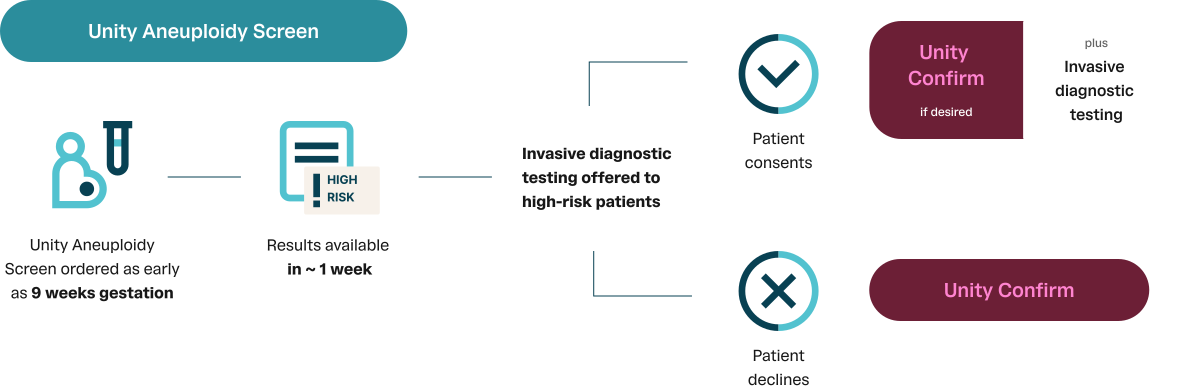
The confirmatory pathway.
Unity Confirm is available exclusively following a high-risk Unity Aneuploidy™ Screen results when ordered front-line.
Unity AneuploidyTM NIPT

- Trisomy 21*
- Trisomy 18*
- Trisomy 13*
- Sex Chromosome Aneuploidies:
X, XXY, XYY, XXX - Zygosity
- 22q11.2 Microdeletion Syndrome*
- Fetal Sex*

Unity Fetal AntigenTM Tests
- Big C, little c, D, E, e, Fya (Duffy), Fyb (Duffy), jka (Kidd), jkb (Kidd), K (Kell), k, M, N, Big S, little s, U
- *M and N antigens must be selected at ordering and cannot be added after the test is submitted
- HPA-1a (with HLA-DRB3*01:01 when applicable), HPA-1b, HPA-2a, HPA-2b, HPA-3a, HPA-3b, HPA-4a, HPA-4b, HPA-5a, HPA-5b, HPA-9a, HPA-9b, HPA-15a, HPA-15b
Unity ConfirmTM
Non-invasive confirmatory testing for patients who receive high-risk Unity Aneuploidy NIPT results.*
Powered by Fetal Cell Capture™ technology, Unity Confirm uses whole genome sequencing of intact circulating fetal cells.
Only with Unity Aneuploidy NIPT
Unity Confirm in your practice.
Additional Provider Resources.

Unity Confirm Brochure


Data behind Unity Confirm

Attend a Webinar

Innovation with Unity does not stop here.
When you choose Unity, you are partnering with a company committed to advancing prenatal care and redefining how patients and providers navigate prenatal testing. Request a test kit for your clinic today to streamline access and elevate patient care.
Unity Confirm may have false-positive and false-negative results. Amniocentesis should be considered to evaluate for mosaicism. Results are not a guaranty. Important medical decisions should not rely on Unity Confirm test results alone. Clinical correlation is necessary, including but not limited to prior cfDNA testing, ultrasound findings, and diagnostic testing. Unity Confirm is a laboratory-developed test performed in a CLIA-certified and CAP-accredited laboratory. It is not an FDA-approved or FDA-cleared diagnostic test. Test performance may vary based on gestational age and other factors.
References
Hatt, Lotte, et al. “A new marker set that identifies fetal cells in maternal circulation with high specificity.” Prenatal Diagnosis 34.11 (2014): 1066-1072.
Stampalija, T., et al. “Single-cell-based non-invasive screening for fetal pathogenic microimbalances using maternal blood: comparison with invasive prenatal diagnosis.” Ultrasound in Obstetrics & Gynecology (2026).
Weymaere, Jana, et al. “Enrichment of circulating trophoblasts from maternal blood using filtration-based Metacell® technology.” Plos one 17.7 (2022): e0271226.
Jeppesen, Line Dahl, et al. “Screening for Fetal Aneuploidy and Sex Chromosomal Anomalies in a Pregnant Woman with Mosaicism for Turner Syndrome—Applications and Advantages of Cell-Based NIPT.” Frontiers in Genetics 12 (2021): 741752.
Bellair, Michelle, et al. “Noninvasive single-cell-based prenatal genetic testing: A proof of concept clinical study.” Prenatal Diagnosis 44.3 (2024): 304-316.
Chakchouk, Imen, and Ignatia B. Van den Veyver. “Whole-Genome Amplification on Single Circulating Trophoblast Cell.” Whole Genome Amplification: Methods and Protocols. New York, NY: Springer US, 2026. 11-23.
Zhuo, Xinming, et al. “Use of amplicon-based sequencing for testing fetal identity and monogenic traits with Single Circulating Trophoblast (SCT) as one form of cell-based NIPT.” PLoS One 16.4 (2021): e0249695.
Okoror, Collins Ejakhianghe Maximilian, and Suruchi Arora. “Prenatal diagnosis after high chance non-invasive prenatal testing for trisomies 21, 18 and 13, chorionic villus sampling or amniocentesis?–Experience at a district general hospital in the United Kingdom.” European Journal of Obstetrics & Gynecology and Reproductive Biology: X 19 (2023): 100211.
Mokhtar, Rifat, et al. “Comparing non-invasive prenatal testing with invasive testing for the detection of trisomy 21.” Cureus 14.11 (2022).
Chetty, Shilpa, Matthew J. Garabedian, and Mary E. Norton. “Uptake of noninvasive prenatal testing (NIPT) in women following positive aneuploidy screening.” Prenatal Diagnosis 33.6 (2013): 542-546.