
The new standard in prenatal care.
The first-and-only non-invasive prenatal test that leverages QCT™ technology to deliver direct fetal risk assessment for up to 14 prevalent and actionable recessive and X-linked genes — all from a single maternal blood.
The fastest growing prenatal lab in the country.
with 850,000+ Unity Fetal Risk Screen tests ordered.
Dual panel flexibility for your diverse patient population.
5-Gene Panel
- Cystic Fibrosis‡
- Sickle Cell Disease
- Beta-Thalassemia
- Spinal Muscular Atrophy
- Alpha-Thalassemia
14-Gene Panel
- 5-Gene Panel
- Canavan Disease
- MCAD Deficiency
- Tay-Sachs Disease
- Familial Dysautonomia
- Smith-Lemli-Opitz Syndrome
- PMM2-Congenital Disorder of Glycosylation
- DMD-Associated
Dystrophinopathies* - Phenylalanine Hydroxylase Deficiency (PKU)
- Fragile X Syndrome*†
Unity measures what matters.
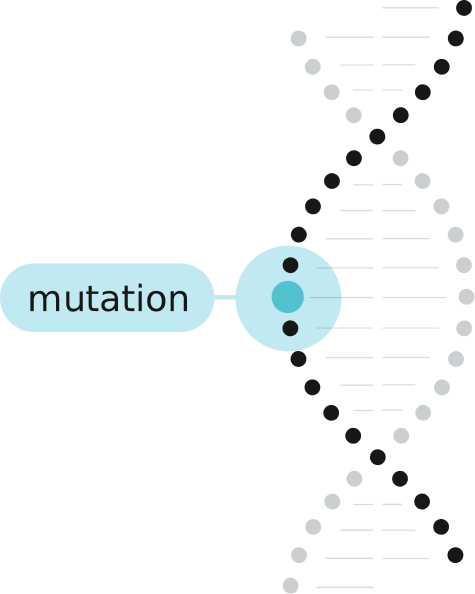
Every inherited genetic condition comes down to one thing—a specific mutation.
Unity Fetal Risk Screen delivers highly accurate fetal risk assessment for autosomal recessive conditions via cfDNA in the general obstetric population and is able to identify affected pregnancies with both homozygous or heterozygous variants.
Unity pinpoints and measures the disease-causing mutation in the pregnancy:
How Unity works.
Unity provides a streamlined, non-invasive approach that combines carrier screening and cfDNA analysis for recessive conditions to deliver pregnancy-specific fetal risk from a single maternal blood draw.

Assess pregnant patient carrier status
Next-generation sequencing identifies carrier status for up to 14 recessive and X-linked genes.

Measure the disease-causing mutation in the pregnancy
For pregnant carriers, QCTs directly quantify the maternal variant in cfDNA to determine inheritance.

Determine presence of paternal variants without relying on a partner sample
Next-generation sequencing detects unique, paternally inherited variants in cfDNA.

Fetal risk assessment
Unity provides a pregnancy-specific fetal risk assessment for informed medical management.
Unity gets it done in one.
One order. One blood draw. One bill.
By directly measuring the disease-causing mutation, Unity Fetal Risk Screen eliminates workflow complexity.

Maternal blood draw to determine carrier status and fetal risk for recessive conditions

Personalized fetal risk provided for this specific pregnancy (up to 9 in 10 or down to 1 in 10,000)4

Post-test genetic counseling available with BillionToOne’s licensed genetic counselors
While partner testing is accepted, it is not required for an accurate fetal risk assessment.

Maternal blood draw to determine carrier status

Post-test genetic counseling

Partner sample is required for reproductive risk

Couples receive a maximum reproductive risk of 25%
Post-test genetic counseling
Additional Provider Resources.

Unity Complete Brochure


Test Requisition Form
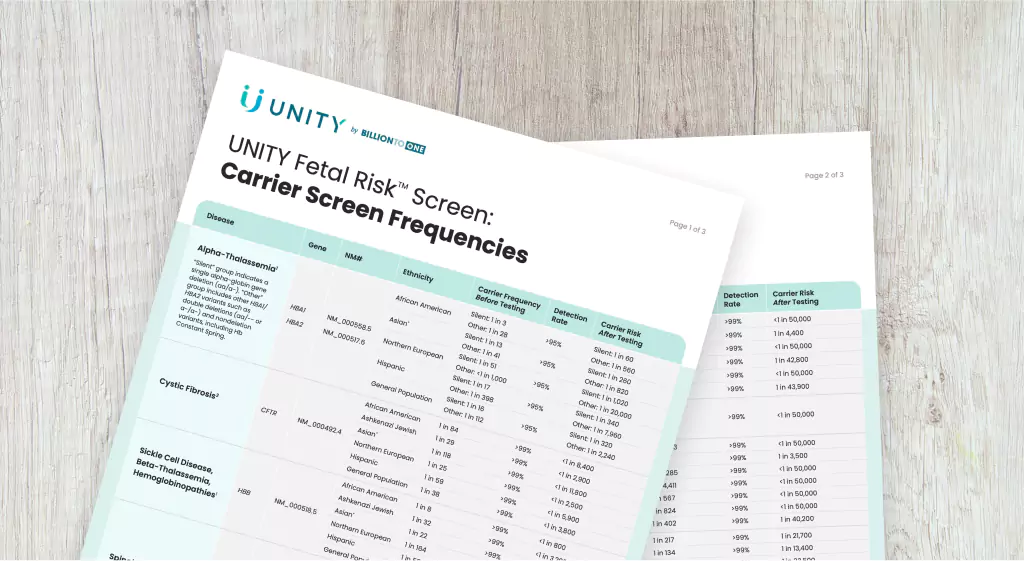
Carrier Frequencies

Innovation with Unity does not stop here.
When you choose Unity, you are partnering with a company committed to advancing prenatal care and redefining how patients and providers navigate prenatal testing. Request a test kit for your clinic today to streamline access and elevate patient care.
Unity tests can produce false-positive and false-negative results. Results are not a guarantee. Amniocentesis should always be considered with high risk results. Important medical decisions should not rely on Unity test results alone. Clinical correlation is necessary, including but not limited to the results of prior and further prenatal testing. Unity tests are laboratory-developed tests performed in a CLIA-certified and CAP-accredited laboratory. They are not FDA-approved or FDA-cleared diagnostic tests. Test performance may vary based on gestational age and other factors.
References
Data on file as of June 2026.
For autosomal recessive conditions, the clinical sensitivity refers to the estimated clinical detection rate of high-risk fetuses by cfDNA fetal risk assessment. For X-linked conditions, for which cfDNA testing is only clarified via fetal sex, the clinical sensitivity refers to carrier screening detection and does not account for de novo mutations.
Standalone specificity for sgNIPT is derived for general population screening from the study cohort reported in Wynn et al., 20234, which reports 99.9% end-to-end specificity, including carrier screening and sgNIPT.
Wynn J, et al. Performance of single-gene noninvasive prenatal testing for autosomal recessive conditions in a general population setting. Prenat Diagn. 2023 Sep; 43(10):1344-1354. doi:10.1002/pd.6427. Epub 2023 Sep 6. PMID: 37674263.
Wynn, J., et al. "Routine cell-free DNA prenatal screening identifies pregnancies at high risk for cystic fibrosis that may benefit from fetal therapy." Journal of Cystic Fibrosis (2025).
Tsao, D. S., et al. (2019). A novel high-throughput molecular counting method with single base-pair resolution enables accurate single-gene NIPT. Scientific Reports, 9, 14382. https://doi.org/10.1038/s41598-019-50378-8.
Carrier screening for genetic conditions. Committee Opinion No. 691.American College of Obstetricians and Gynecologists. Obstet Gynecol 2017;129:e41–55.
Deignan, Joshua L., et al. Updated recommendations for CFTR carrier screening: A position statement of the American College of Medical Genetics and Genomics (ACMG). Genetics in Medicine 25.8 (2023): 100867.